Unheard Signals: Why Leadership Coaching Still Needs a Human in the Room

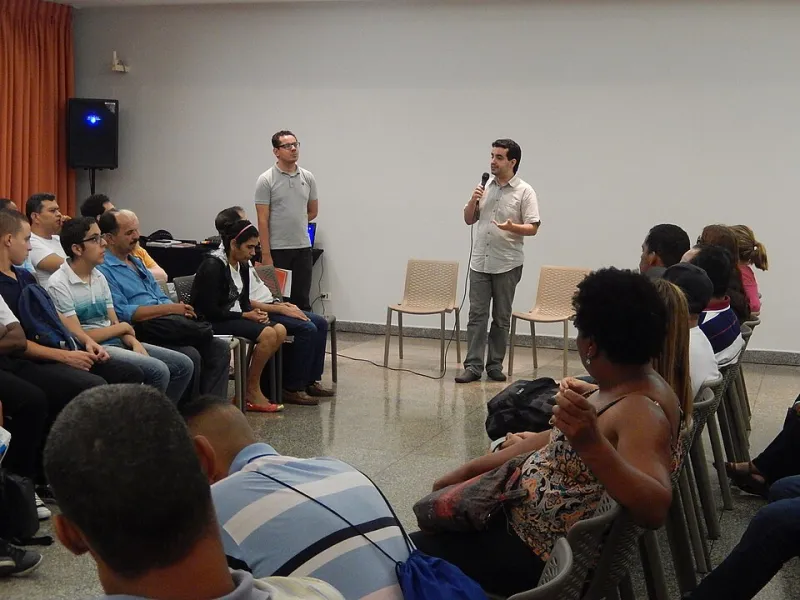
Photo: 颐园新居, CC BY-SA 3.0, via Wikimedia Commons
A quiet change in how coaching is bought
For most of the past decade, coaching in British organisations was purchased in small, human quantities: a handful of hours for a newly appointed director, a block of sessions for someone the board had flagged as a risk, an external confidant retained by a chief executive. The buying decision was usually made by a person who knew the individual concerned. In 2026 that decision increasingly sits with a platform, a procurement team and a licence count.
The commercial logic is not difficult to follow. A digital tool can be available to two thousand employees on the same afternoon, at a fraction of the cost of a single day of an experienced practitioner's time, with dashboards that report usage and satisfaction in real time. For a function under pressure to demonstrate reach, the appeal is obvious and it would be dishonest to pretend otherwise.
What deserves scrutiny is not the technology but the definition of coaching it quietly carries.
The material a coach works with is mostly not verbal
A skilled practitioner spends much of a session reading things that never appear in a transcript. The half-second delay before a client answers a straightforward question. A shift in register when a particular colleague's name is raised. The answer delivered slightly too smoothly, as though rehearsed on the drive over. The moment a client describes their role in the language of an organisation chart rather than in their own words.
None of this is mystical. It is observation, and it is the raw material of the work. The interventions that matter are frequently small: a pause held a little longer than is comfortable, a question repeated because the first answer was a deflection, an observation offered plainly — “you slowed down when you mentioned your finance director”.
A system can transcribe all of it. It cannot decide, in the moment, which of it is worth interrupting for. That judgement is the service being purchased.
The sentence a client almost says
Ask any experienced coach about the most valuable moments in their practice and many will describe something similar: a client begins a sentence, stops, and redirects. The abandoned sentence is frequently where the real issue lives — a doubt about the strategy, a resentment towards a peer, a growing certainty that the role is simply wrong.
In a live conversation, the coach can notice the swerve and name it gently. The invitation is unrehearsed. It depends on a human decision that the discomfort is worth it, and on a relationship in which that discomfort has been earned across previous hours.
Software, by design, follows the client's lead. It asks the next question in the sequence. It does not risk the relationship because it does not have one.
There is a second loss, subtler still: continuity of contradiction. A coach who has sat with the same leader across six months holds a memory of the gap between what was promised and what was done. In March the client said delegation was the priority; by June the calendar had not changed. Raising that gap, and knowing exactly how hard to press, is not a feature that arrives in a version update.
Where automation genuinely earns its place
None of the above is an argument for keeping coaching scarce. The strongest criticism of the British market has long been its exclusivity: available to those already sponsored, denied to the supervisor in a distribution centre in Warrington or the operations manager in Dundee who has never been offered a structured conversation about their development.
Digital tools address that problem honestly. They provide cadence — the weekly reflection, the prompt before a difficult meeting, the structured review once a project closes. They surface patterns across a cohort that no individual coach could see. They are available at the hour when a manager is actually awake and worried. And for some people, particularly early in a career, disclosure to a machine feels materially lower-risk than disclosure to a stranger with a senior title.
Those are real gains, and a serious programme should bank them rather than posture against them.
What a defensible hybrid model requires
The question for 2026 is not whether to use the tools but where to draw the line. Four conditions seem reasonable.
Allocate by consequence. Software for cadence, reinforcement and access; human hours for transitions, conflict, ethical weight and decisions carrying career risk. A promotion, a restructure, a return from parental leave, a resignation being contemplated — these are human weather.
Define escalation explicitly. Any theme involving bullying, safeguarding, clinical need or a serious intention to leave should route to a person, and quickly. A system that cannot escalate is not coaching; it is content.
Contract the data. What is recorded, who may read it, how long it is retained, and what an employee is entitled to have deleted. UK GDPR obligations are not a footnote to a coaching platform; they are part of its fitness for purpose.
Judge human hours by quality, not volume. The metric that matters is not sessions delivered but assumptions surfaced, relationships repaired and decisions altered.
The only test that matters
Boards are entitled to ask a blunt question of any development spend: in the past quarter, did a conversation change what someone actually did? Not how many people logged in, not whether the average rating was 4.3 out of 5, but whether a manager made a different call because of something said to them in confidence.
Automation can help answer part of that question, and it will get better at doing so. The uncomfortable truths — the ones that change behaviour — still tend to require a person willing to sit in the room, notice the swerve, and wait.