Rehearsal Isn't Training: How UK Teams Mistake Occasional Events for Real Development
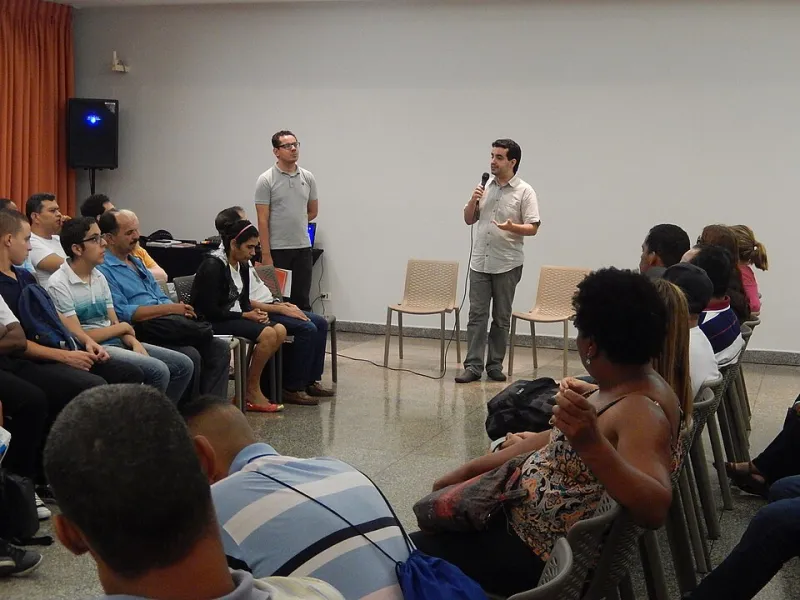
Photo: Laramara, CC BY-SA 4.0, via Wikimedia Commons
There is a peculiar comfort the British workplace takes in the calendar. The away day is booked, the facilitator confirmed, the Flipchart paper ordered. For two days, a team gathers in a hotel outside Milton Keynes, discusses its values, rates its communication on a scale of one to ten, and drives home with a branded notebook and a vague sense of renewal. Within a fortnight, nothing has changed.
This is not a failure of intent. It is a failure of method — and it is costing UK organisations dearly.
The Theatre of the Quarterly Event
British businesses now spend a significant share of their development budgets on what might generously be called 'performance events': motivational workshops, team-building retreats, and structured check-ins that exist largely to demonstrate that development is happening. The distinction matters. An event performs development. Practice produces it.
The sports world understood this decades ago. No serious coach believes that a footballer improves by attending an annual intensive camp. Improvement comes from short, deliberate, repeated sessions — drills embedded in the weekly rhythm, with immediate feedback and progressive difficulty. Yet British organisations persist in the opposite model: high-production, low-frequency interventions that resemble rehearsals for a performance that never arrives.
Why We Keep Booking the Hotel
The reasons are structural rather than lazy. Events are easy to budget, easy to evidence, and easy to attend. A leadership team can point to a two-day workshop in the annual report far more readily than it can evidence a thousand small moments of coaching embedded in the working week.
There is also a cultural dimension. The away day offers a socially acceptable container for honesty. Colleagues who would never challenge one another in a Tuesday meeting will, after a trust exercise and a buffet lunch, admit that communication 'could be better'. But the container is temporary. Once back at their desks, the norms that produced the dysfunction resume, undisturbed.
What Deliberate Practice Looks Like at Work
Translating the coaching principle into a business setting requires three commitments that most UK organisations have not made.
First, frequency over intensity. Twenty minutes of focused feedback each week outperforms an annual development day, in the same way that daily drills outperform a yearly training camp. The unit of development is the working week, not the financial quarter.
Second, specificity. 'Improve communication' is not a practice; it is a wish. Real practice targets a defined behaviour — how a manager opens a one-to-one, how a team handles disagreement in a stand-up — and repeats it until it becomes default.
Third, feedback that arrives while it still matters. In sport, the coach corrects the technique mid-drill. In British offices, feedback typically arrives months later, laundered through a performance review, by which point the habit is fossilised.
Rebuilding the Rhythm
None of this requires abandoning events entirely. A well-run offsite can align a team and reset priorities. But it should be the punctuation, not the prose. Organisations serious about peak performance might ask a simpler question of their development spend: what did people do differently on Monday? If the honest answer is 'nothing', the money bought a pleasant two days — and a very expensive myth.