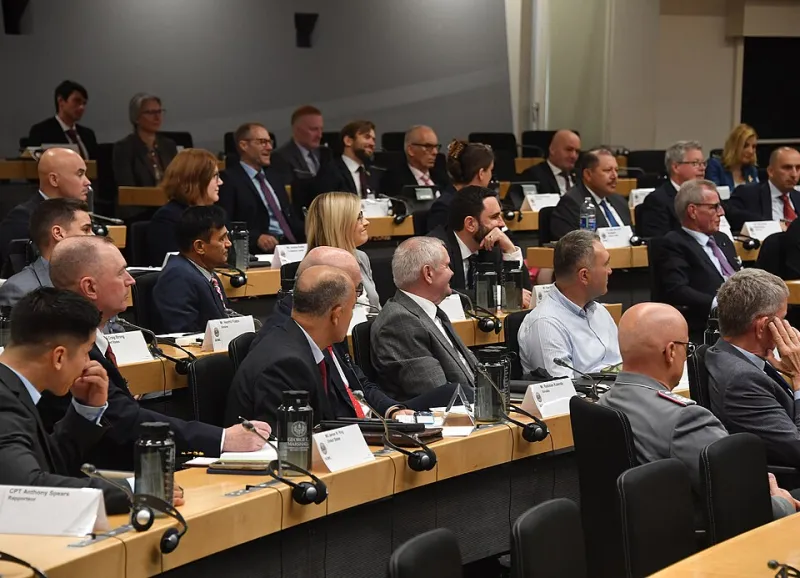
The Presence Paradox: How British Executives Mistake Occupying Space for Creating Value

In the mahogany-lined corridors of Britain's corporate headquarters, a curious phenomenon persists. Senior executives, armed with decades of experience and impressive credentials, have become prisoners of their own visibility. They equate their physical presence with their professional worth, confusing the act of being seen with the art of creating value.
This presence paradox represents one of the most insidious challenges facing modern British leadership. It manifests in executives who arrive first and leave last, who populate every meeting regardless of relevance, and who measure their contribution by their availability rather than their strategic impact.
The Visibility Obsession
The roots of this behaviour run deep within British corporate culture. Traditional hierarchies have long emphasised the importance of "showing face" and "being present for the team." What began as a reasonable expectation of accessibility has morphed into an exhausting performance of perpetual availability.
Consider the senior director who attends fourteen meetings per week, contributing meaningfully to perhaps three. Their calendar becomes a monument to busy-ness rather than business. They mistake motion for progress, confusing the appearance of engagement with genuine strategic contribution.
This visibility obsession creates a cascade of inefficiencies throughout the organisation. Teams wait for approvals that could be delegated. Decisions stagnate whilst executives juggle competing demands on their time. Strategic thinking becomes relegated to stolen moments between appointments, if it happens at all.
The Trust Deficit
Beneath the surface of constant presence lies a fundamental crisis of trust. Executives who feel compelled to oversee every detail signal their lack of confidence in their teams' capabilities. This micromanagement masquerading as leadership creates a vicious cycle: teams become dependent on executive oversight, validating the leader's belief that they cannot step back.
The irony is profound. The very presence meant to demonstrate commitment actually undermines the leader's effectiveness. By inserting themselves into every process, they become bottlenecks rather than enablers. Their teams learn to wait rather than act, to seek permission rather than take ownership.
This trust deficit extends beyond immediate reports to the broader organisation. When senior leaders cannot delegate effectively, they signal that the systems and people they've put in place are inadequate. The message reverberates: if the CEO doesn't trust the management team, why should anyone else?
The Strategic Sacrifice
Perhaps most damaging is how the presence paradox sacrifices strategic thinking on the altar of tactical involvement. Britain's most senior executives find themselves trapped in operational detail, unable to lift their gaze to the horizon where their true value lies.
Strategic leadership requires space for reflection, time for deep analysis, and freedom to explore unconventional solutions. These activities rarely produce immediate, visible outputs. They don't generate the satisfying sense of productivity that comes from clearing an inbox or chairing a meeting.
Yet this strategic work represents the highest and best use of executive capability. The CEO who spends three hours in thoughtful analysis of market trends creates more value than one who spends the same time in back-to-back operational reviews.
Redefining Executive Value
Breaking free from the presence paradox requires a fundamental reframing of how executive value is created and measured. True leadership impact comes not from omnipresence but from strategic focus, effective delegation, and the creation of systems that function independently.
The most effective British leaders understand this distinction. They measure their success not by their calendar density but by their team's ability to operate without constant oversight. They recognise that their highest contribution often happens away from the office: in strategic thinking, relationship building, and long-term planning.
The Delegation Imperative
Effective delegation becomes the antidote to the presence paradox. But delegation in this context means more than simply assigning tasks. It requires creating clear frameworks for decision-making, establishing robust communication channels, and building confidence in team capabilities.
Successful executives develop what might be called "strategic absence" – the ability to step back from day-to-day operations whilst maintaining appropriate oversight. They create systems that inform without overwhelming, that escalate exceptions without creating dependencies.
Building Trust Through Distance
Counter-intuitively, strategic distance can actually strengthen trust between leaders and their teams. When executives demonstrate confidence in their people's abilities by stepping back, they create space for growth and innovation. Teams rise to meet expectations when those expectations are clearly communicated and consistently supported.
This doesn't mean abdication of responsibility. Rather, it represents a more sophisticated understanding of how leadership influence works. The executive who can shape outcomes without controlling every input demonstrates mastery of their craft.
The Performance Framework
Organisations must evolve their performance frameworks to support this shift. Instead of measuring executive effectiveness through activity metrics – meetings attended, emails sent, hours worked – they should focus on outcome measures. Did the strategy advance? Did the team develop? Did the organisation become more capable?
This requires courage from boards and senior leadership teams. It means accepting that the most valuable work often happens invisibly, that the best leaders might not be the most visible ones, and that presence and performance are not synonymous.
The Path Forward
Breaking the presence paradox demands both individual reflection and organisational change. Leaders must honestly assess whether their constant involvement adds value or creates dependency. They must develop the confidence to step back and the systems to stay informed.
Organisations, meanwhile, must create cultures that reward strategic thinking over tactical busy-ness, that measure leaders by their teams' capabilities rather than their own visibility. This transformation won't happen overnight, but it's essential for British businesses seeking to compete in an increasingly complex global marketplace.
The executives who master this balance – who understand when to be present and when to be absent, when to engage and when to empower – will find themselves creating exponentially more value. They'll discover that true leadership isn't about occupying space; it's about creating the conditions for others to flourish.