The Governance Mirage: Why Britain's Succession Plans Are Documents, Not Development

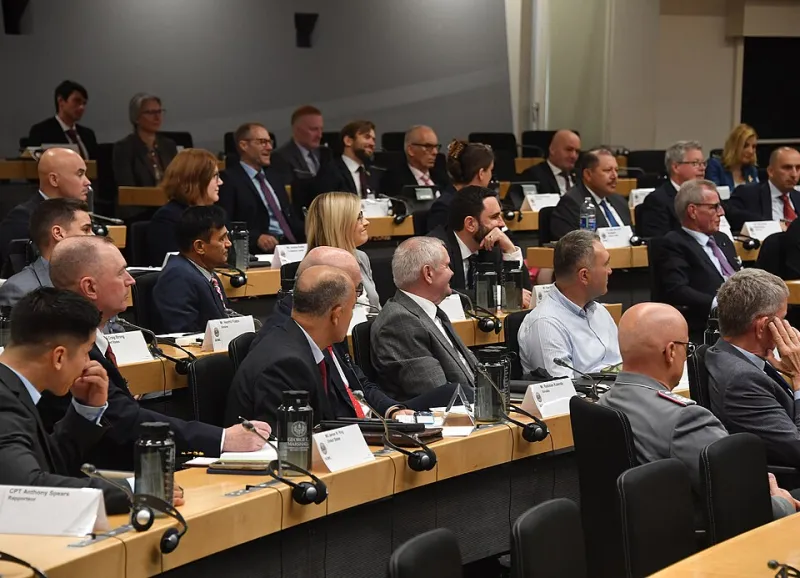
Photo: boardroom succession planning strategy UK executives meeting table, via www.banwo-ighodalo.com
The Governance Mirage: Why Britain's Succession Plans Are Documents, Not Development
At some point in the last two decades, succession planning in British organisations underwent a subtle but consequential transformation. What was once understood as a long-term investment in the development of future leadership became, in many enterprises, a compliance artefact — a document reviewed annually, filed with appropriate solemnity, and largely forgotten until the next governance cycle demands its reappearance.
The consequences of this transformation are not always immediately visible. Succession documents look credible. They contain names, timelines, and readiness ratings. They satisfy non-executive directors and satisfy audit requirements. They create the comfortable impression that the organisation has thought seriously about its leadership future.
Then a chief executive resigns unexpectedly, a critical divisional director is headhunted, or a longstanding board member's health forces an abrupt departure — and the document is opened with genuine urgency for the first time. What follows frequently reveals how thin the preparation beneath it actually was.
The Architecture of the Illusion
Understanding why succession planning so often fails in practice requires examining how it typically gets constructed. In most UK organisations, the process begins with a request — from the company secretary, the HR director, or the remuneration committee — for an updated succession map. Senior leaders are asked to identify potential successors for their roles, typically categorised by readiness: ready now, ready in one to two years, ready in three to five years.
These assessments are made, in the main, on the basis of current performance and visible potential. They are rarely informed by structured developmental data, formal leadership assessments, or any rigorous evaluation of whether the individuals named have been given the experiences, challenges, and development inputs required to genuinely prepare them for the roles they are identified to fill.
The document is produced, reviewed, and approved. The individuals named within it may or may not be aware of their inclusion. In many cases, the conversations that should follow — the direct developmental dialogue, the targeted stretch assignments, the executive coaching, the board-level exposure — simply do not happen. The plan exists. The development does not.
This is not malice. It is, in most cases, a combination of time pressure, cultural discomfort with direct conversations about seniority and succession, and a structural tendency to treat governance requirements as ends in themselves rather than as prompts for substantive action.
When the Gap Is Exposed
The British corporate landscape offers a steady stream of examples — rarely publicised in full, but well understood within organisations that have lived through them — of succession failures that unfolded precisely along these lines. A long-tenured chief executive who had always indicated they would serve until retirement departs abruptly following a board disagreement. The succession plan names a deputy who, on closer inspection, has never led a P&L, has limited experience of investor relations, and has never managed a significant organisational transformation.
The deputy is capable. They are well-regarded. But they have not been developed for the role they are now being asked to fill — because the plan that named them as ready never generated the development activity that would have made them so.
The organisation's response, under pressure, is typically to reach for an external hire or an interim appointment. Both carry their own risks, costs, and cultural disruptions. The internal candidate who might have been genuinely ready, had the pipeline been real rather than notional, is now a missed opportunity.
Distinguishing the Real from the Performative
The distinction between a genuine leadership pipeline and a governance document is not difficult to identify, once you know what to look for. The following diagnostic questions can help boards, HR directors, and senior leaders assess the honest state of their succession preparedness.
Are successors aware of their designation? A succession plan that names individuals without their knowledge is not a development tool — it is a private list. Genuine pipeline development requires direct, transparent conversations with identified successors about the organisation's intentions, the individual's own aspirations, and the developmental pathway being constructed for them.
Has each successor received targeted developmental investment in the last twelve months? If the answer is no — or if the investment amounts to attendance at a leadership programme with no direct connection to the specific capabilities required for the successor role — the pipeline is nominal rather than substantive.
Have successors been exposed to the full scope of the role they are expected to fill? Readiness for senior leadership cannot be assessed from a distance. Individuals identified as potential successors should be given structured exposure to board dynamics, external stakeholder relationships, strategic decision-making processes, and the political and cultural dimensions of the role. This requires deliberate design, not incidental experience.
What is the organisation's response to an immediate vacancy? This is perhaps the most revealing test. If a critical role became vacant tomorrow, would the named successor be able to step in with confidence — not perfection, but genuine competence? If the honest answer is uncertainty, the pipeline requires immediate attention.
Is succession planning owned by the board or delegated entirely to HR? Genuine pipeline development requires board-level commitment and engagement. When succession is treated purely as an HR process, it tends to generate documentation without the organisational authority to drive the developmental investment that documentation should represent.
Building Something That Actually Works
Transforming a succession document into a functioning pipeline requires a shift in both mindset and practice. It begins with accepting that genuine readiness cannot be produced quickly — which means the work must begin long before any vacancy is anticipated.
Organisations that take pipeline development seriously invest in it continuously and visibly. They build structured development pathways for identified successors, including executive coaching, board-level mentoring, cross-functional exposure, and deliberately challenging assignments designed to build the specific capabilities the senior roles demand. They review these pathways regularly — not the document, but the actual developmental progress of the individuals within it.
They also acknowledge that succession planning is not solely about identifying who might fill a role, but about understanding the future demands of the organisation and ensuring that the leadership pipeline is aligned with those demands. The successor for today's chief executive may need a fundamentally different capability profile from the successor who will be required in five years' time, as the organisation's strategic context evolves.
At Peak Performance FDC, we work with boards and senior leadership teams to design succession frameworks that are built for genuine preparedness rather than governance comfort. The distinction matters — not as a theoretical nicety, but as a practical imperative for every organisation that understands its future depends on the quality of its next generation of leaders.
 Photo: Peak Performance FDC, via sport24.b-cdn.net
A plan that satisfies the board but fails the organisation is not a plan. It is a risk disguised as reassurance.