The Comfort Trap: When Workplace Wellbeing Programmes Begin Destroying the Performance They Were Designed to Protect

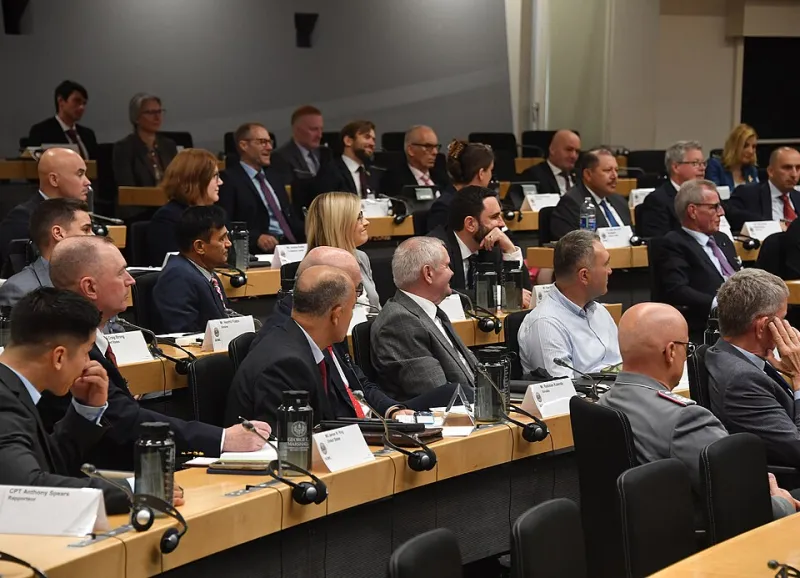
Photo: diverse professional team engaged in intense debate boardroom UK office, via c8.alamy.com
A Necessary Concept, Dangerously Misapplied
Few ideas have travelled further or faster through British corporate life over the past decade than psychological safety. Drawn from Amy Edmondson's rigorous research into team effectiveness, the concept offered something genuinely valuable: the recognition that people perform better when they feel secure enough to take interpersonal risks — to raise concerns, admit mistakes and challenge prevailing assumptions without fear of humiliation or retribution.
 Photo: Amy Edmondson, via img.freepik.com
The research is sound. The application, in many British organisations, has become something rather different.
What began as a framework for enabling honest, high-quality dialogue has, in a significant number of workplaces, been transformed into a cultural mandate for the removal of discomfort. Challenge has been reframed as aggression. Rigorous questioning has been labelled as unsafe. Accountability has been quietly retired as a concept too threatening to the emotional equilibrium of the team. The result is not psychological safety. It is psychological stasis — and it is costing British businesses dearly.
How Overcorrection Happens
The drift from safety to softness rarely occurs through a single decision. It accumulates gradually, through a series of individually defensible choices that collectively produce a damaging cultural shift.
A leader moderates a heated but productive debate because someone appears uncomfortable. A performance conversation is softened to avoid causing distress. A dissenting view is met with careful validation rather than genuine engagement. Feedback is withheld because the timing feels wrong, and then withheld again because the moment has passed. Each individual act seems considerate. The cumulative effect is an organisation that has lost its capacity for the honest, stretching dialogue that drives improvement.
This pattern is particularly pronounced in British organisations, where a pre-existing cultural tendency towards politeness and conflict avoidance has found unexpected reinforcement in the language of wellbeing. Psychological safety has, in some contexts, provided an institutionally respectable vocabulary for a discomfort with directness that predates the wellbeing movement by several generations.
The consequences are not merely cultural. They are competitive.
What Elite Performance Actually Requires
Study any genuinely high-performing team — in sport, in medicine, in the military, in the most innovative technology organisations — and a consistent pattern emerges. These teams are not characterised by the absence of tension. They are characterised by a particular quality of tension: honest, focused, directed at problems rather than people, and conducted within a framework of mutual respect and shared purpose.
The England rugby team does not improve by protecting players from the discomfort of hearing where they fell short. A surgical team does not reduce errors by ensuring that no one feels challenged during a debrief. A product team does not build better software by suppressing the friction between competing ideas. In each case, the tension is not the enemy of performance. It is, properly managed, one of its primary engines.
 Photo: England rugby team, via delveintoeurope.com
Edmondson's original research was explicit on this point. Psychological safety is most powerful when combined with high performance standards — not as a replacement for them. Teams that are both safe and stretching outperform teams that are either safe or stretching in isolation. The combination is the point. British organisations that have pursued safety whilst abandoning stretch have not implemented the model. They have implemented half of it.
The Leadership Responsibility
Senior leaders bear direct responsibility for this drift, even when — particularly when — it has occurred with the best of intentions. The wellbeing agenda has created a generation of managers who are acutely sensitive to the emotional temperature of their teams and, in many cases, poorly equipped to distinguish between distress that signals genuine harm and discomfort that signals genuine growth.
These are not the same thing. A team member who is upset because they have received honest, evidence-based feedback about their performance is experiencing something categorically different from a team member who is experiencing harassment, exclusion or psychological harm. Treating both with the same protective response does not advance wellbeing. It conflates it with comfort, and in doing so, denies individuals the developmental experiences that build genuine resilience and capability.
The most effective leaders understand this distinction instinctively. They create environments where people feel genuinely safe — where mistakes are examined rather than punished, where dissent is welcomed rather than suppressed — whilst simultaneously maintaining the standards and the intellectual rigour that make membership of the team worth having.
A Framework for Restoration
For British leaders seeking to recalibrate without dismantling the genuine progress made in workplace culture, three principles are worth holding simultaneously.
Separate safety from comfort. Psychological safety is about freedom from fear of humiliation, exclusion or retribution. It is not freedom from challenge, disagreement or accountability. Naming this distinction explicitly — in team conversations, in leadership development programmes, in cultural frameworks — is a necessary first step.
Rehabilitate constructive tension. High-quality debate, rigorous questioning and direct feedback should be presented not as threats to wellbeing but as expressions of respect — evidence that a leader takes someone's potential seriously enough to engage with it honestly. Teams that understand this distinction tend to welcome challenge in ways that teams trained to avoid it cannot.
Model the behaviour. Leaders who are visibly comfortable being challenged, who demonstrate that they can receive direct feedback without defensiveness, and who engage in genuine debate rather than managed consensus, create the conditions in which others feel both safe and stretched. The tone is always set from the top.
Reclaiming the Original Vision
Psychological safety, properly understood, is one of the most powerful frameworks available to British leaders. The goal is not to abandon it. The goal is to rescue it from the distortion that has rendered it, in too many organisations, an obstacle to the very performance it was designed to enable.
Britain's best organisations will be those that hold both truths at once: that people perform better when they feel genuinely secure, and that genuine security is not the same as permanent comfort. The leaders who can sustain that tension — who can be both humane and demanding, both supportive and stretching — are the ones who will build teams capable of the kind of excellence that endures.